UCL Injury in Throwers: What Parents and Athletes Should Know
Elbow pain in a thrower is rarely just soreness. Here's how to spot a UCL problem early and what the treatment options actually look like.
This guide is educational and does not replace an evaluation with a physician.
What the UCL is and why throwers stress it
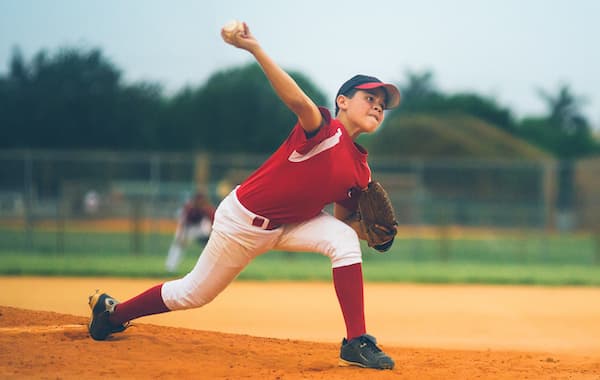
The ulnar collateral ligament (UCL) is the ligament on the inside of the elbow. In overhead throwing — especially pitching — the UCL absorbs enormous force on every throw. Over time, that stress can cause the ligament to stretch, fray, or tear.
Early warning signs
- Inside-elbow pain during or after throwing
- Loss of velocity or control without an obvious mechanical cause
- A 'pop' or sudden sharp pain on a single throw
- Tingling or numbness into the small and ring fingers
- Trouble loosening up — pain returning the next throwing day
Why early evaluation matters
Pitching through inside-elbow pain rarely makes it better. Catching a UCL injury early often opens up non-surgical options — including a structured rest period, a focused throwing-progression program with physical therapy, and review of mechanics and workload.
Imaging (often an MRI or MR arthrogram) can help clarify whether the ligament is irritated, partially torn, or fully torn.
Non-surgical treatment paths
Many partial UCL injuries respond to a rest-and-rehab plan. PRP (platelet-rich plasma) injections may be considered in selected cases. The goal is to settle inflammation, restore range of motion and strength, and return to throwing on a structured timeline.
Dr. Dantzker discusses these options honestly and helps athletes and families understand what's realistic for the rest of the season — and the seasons after.
When surgery becomes the right call
Surgery is usually considered when the UCL is fully torn, when non-surgical care hasn't allowed a return to throwing, or when the timeline of the athlete's goals doesn't fit a conservative path.
UCL surgery generally takes one of two forms: a UCL repair (reattaching the ligament, often with internal-brace support, in carefully selected tears) or a UCL reconstruction — commonly called Tommy John surgery — where a graft is used to rebuild the ligament.
Recovery and return to throwing
Return to competitive throwing after UCL surgery is a long process, typically measured in many months. It's also a process — not a date on a calendar. Athletes follow a staged throwing program built around healing, strength, and biomechanics, with progression based on milestones rather than rushing back.
Dr. Dantzker emphasizes the long view: protecting the elbow for the rest of an athlete's career, not just the next start.
Conversation starters for the visit
- How serious is the injury based on imaging?
- What does a realistic non-surgical timeline look like?
- If surgery is needed, am I a candidate for repair or reconstruction?
- What workload changes would you recommend going forward?