Shoulder Arthritis & Replacement Options
Shoulder replacement isn't one operation — it's a family of them. Picking the right one starts with understanding what's wearing out and what still works.
This guide is educational and does not replace an evaluation with a physician.
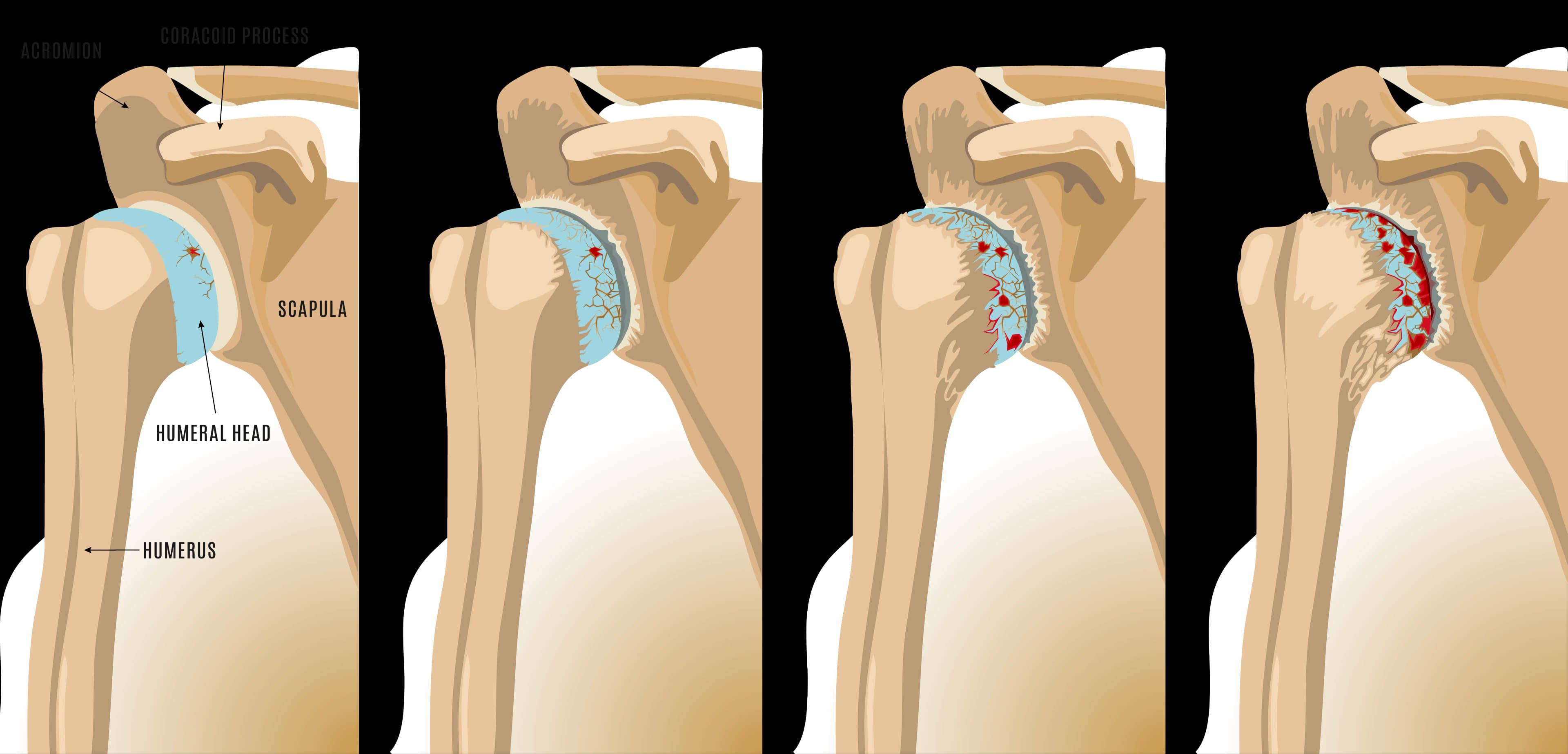
How shoulder arthritis develops
The shoulder is a ball-and-socket joint with a thin layer of cartilage on both sides. When that cartilage wears down — from age, prior injury, or inflammatory conditions — bone starts to grind on bone, and the joint becomes painful and stiff.
Some patients also have rotator cuff damage on top of arthritis, which changes which type of replacement makes the most sense.
Non-surgical care comes first
Most patients start with a non-surgical plan: activity modification, focused physical therapy, anti-inflammatory medication when appropriate, and — in selected cases — an injection to settle a painful flare. Many people manage shoulder arthritis well for years this way.
Surgery becomes a serious conversation when daily life — sleep, dressing, lifting, work — is consistently limited and non-surgical options have been exhausted.
Anatomic total shoulder replacement
An anatomic total shoulder replacement replaces the worn ball and socket with metal and plastic components shaped like the native joint. It works well when the cartilage is worn out but the rotator cuff is still functioning.
Reverse total shoulder replacement
When the rotator cuff is also damaged — or in certain complex fracture patterns — a reverse total shoulder replacement may be the better choice. The ball-and-socket relationship is flipped, which lets the deltoid muscle do more of the work and lifts the arm in ways a torn cuff can't.
Reverse replacement is one of the biggest advances in shoulder surgery and has opened up reliable pain relief and function for patients who used to have very limited options.
Partial replacement and revision
In selected younger patients with isolated damage to one side of the joint, a partial replacement may be considered. Revision shoulder replacement is reserved for patients whose previous implant is failing, loose, or causing problems that can't be solved without re-operating.
Each of these decisions is individualized — built around the patient's anatomy, goals, and prior surgical history.
What recovery typically looks like
Most shoulder replacement patients go home the same day or the next morning. Sling protection is followed by a staged therapy program: first protect, then move, then strengthen. Many patients describe meaningful pain relief within weeks; functional gains continue for many months.
Worth asking at your visit
- What is the condition of my rotator cuff on imaging?
- Am I more of a candidate for an anatomic or reverse replacement?
- How will recovery affect work, driving, and the things I care about?
- What's the realistic long-term expectation for an implant in someone my age?