Labral Tears and Shoulder Instability
Labral tears can be subtle — and they can also be the reason a shoulder keeps slipping out. Here's how to tell which kind you have.
This guide is educational and does not replace an evaluation with a physician.
What the labrum is
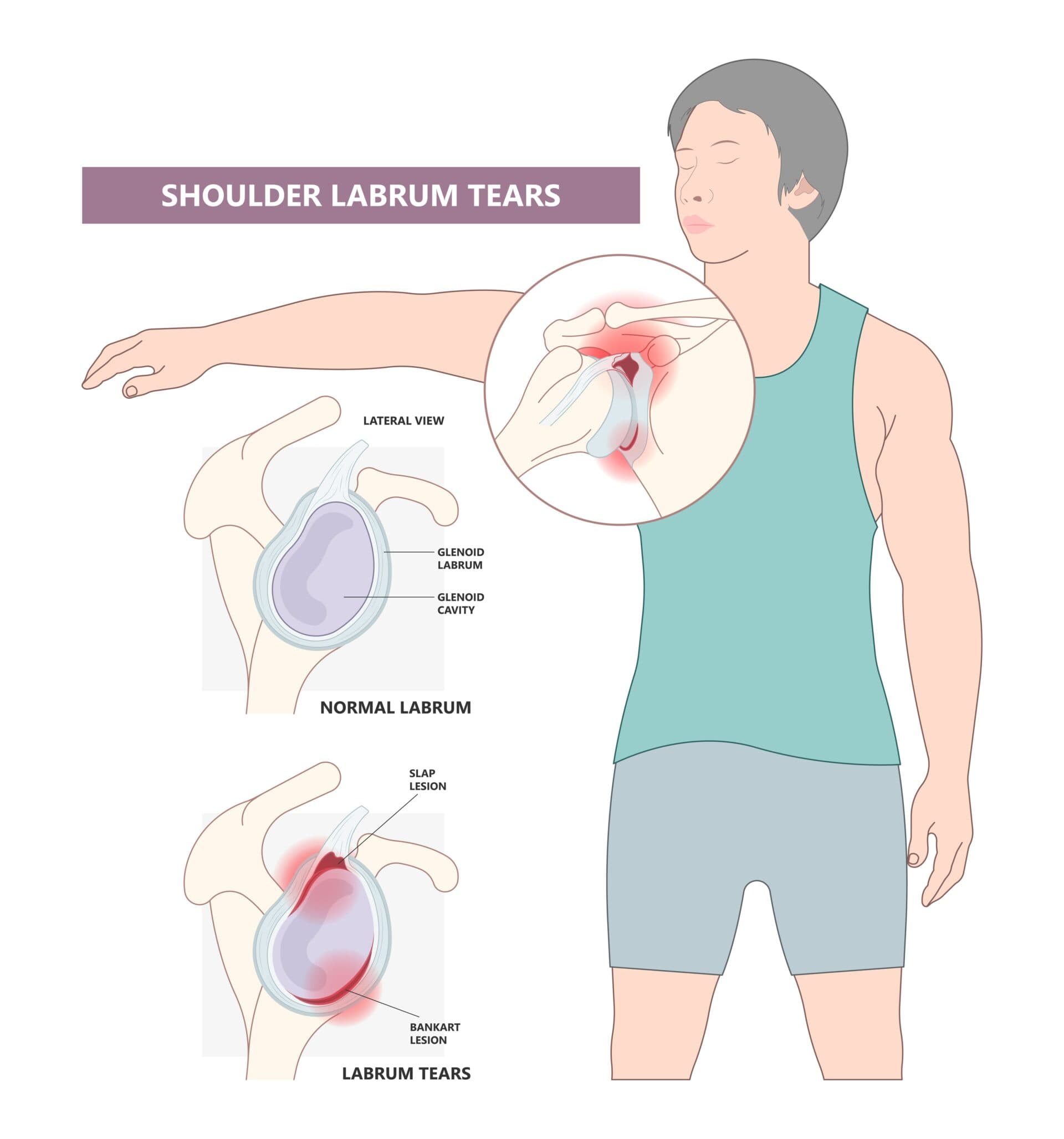
The labrum is a rim of cartilage that deepens the shoulder socket and helps keep the ball of the joint where it belongs. It's also where the long head of the biceps tendon attaches at the top of the socket.
Tears can happen from a single dislocation, from repetitive overhead use, or from a fall onto an outstretched arm.
Symptoms that point to a labral problem
- A sense of looseness or instability — like the shoulder might pop out
- Catching, clicking, or grinding deep in the shoulder
- Pain with overhead motion or throwing
- Loss of confidence in the shoulder during sport or work
Diagnosis
Diagnosis combines history (especially any dislocation events), a focused physical exam, and imaging. An MRI — sometimes with contrast — helps confirm where the tear is and how big it is.
Non-surgical care
Many smaller labral tears — particularly without recurrent instability — improve with a focused therapy program that builds rotator cuff and scapular strength to stabilize the shoulder. Activity modification and time off from aggravating motions are often part of the plan.
When surgery is considered
Surgery is more strongly considered when the shoulder has dislocated more than once, when instability is limiting work or sport, when a tear is large or in a structurally important location, or when non-surgical care hasn't restored confidence in the joint.
Most labral repairs are done arthroscopically. The torn labrum is brought back to the rim of the socket and secured with small anchors.
Recovery and return to activity
Recovery is staged: an initial sling period to protect the repair, followed by progressive motion, strength, and eventually sport-specific work. Timelines vary by the size and location of the tear and by the patient's sport or job.